'>
<rect width='100' height='100' fill='%23B22234'/>
<!-- stripes -->
<g fill='%23fff'>
<rect y='10' width='100' height='10'/>
<rect y='30' width='100' height='10'/>
<rect y='50' width='100' height='10'/>
<rect y='70' width='100' height='10'/>
<rect y='90' width='100' height='10'/>
</g>
<!-- blue box -->
<rect width='50' height='50' fill='%233C3B6E'/>
</g>
</svg>)
'>
<rect width='100' height='100' fill='%23fff'/>
<rect width='100' height='33.33' y='0' fill='%23FF9933'/>
<rect width='100' height='33.33' y='66.66' fill='%23138808'/>
<!-- Ashoka Chakra -->
<circle cx='50' cy='50' r='9' fill='none' stroke='%23000080' stroke-width='2'/>
<g stroke='%23000080' stroke-width='1'>
<line x1='50' y1='41' x2='50' y2='59'/>
<line x1='41' y1='50' x2='59' y2='50'/>
<line x1='44' y1='44' x2='56' y2='56'/>
<line x1='56' y1='44' x2='44' y2='56'/>
</g>
</g>
</svg>)
 info@blackmarlintechnologies.com

Remember when finding information online meant typing a few keywords into Google and clicking through a handful of websites? That whole thing is moving fast, like really fast. Today, lots of people ask questions straight to AI tools such as ChatGPT, Gemini, and Perplexity instead of scrolling through the usual search results. Meanwhile, Google’s AI Overviews drop quick answers right at the top of the search page, which often makes it less necessary to visit multiple sites.
This shift is transforming the way users stumble upon information online. Search is no longer just about ranking web pages it is about becoming the wellspring that AI systems count on and then recommend. Whether someone is searching on Google, asking ChatGPT for advice using a voice assistant, or exploring answers through an AI powered search engine, businesses need to be present across all these channels.
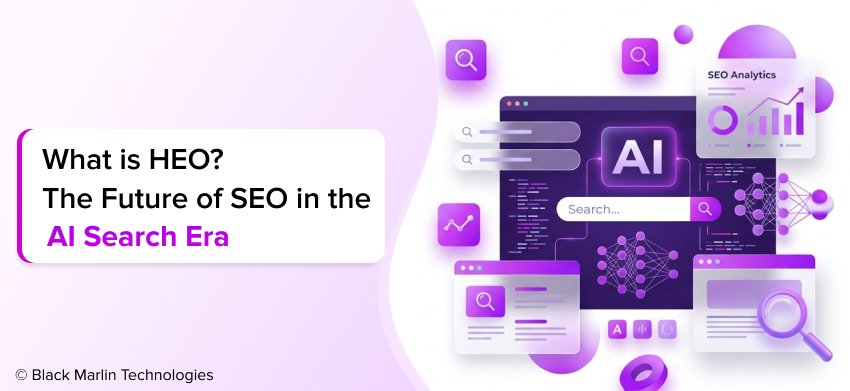 That is where Hybrid Engine Optimization (HEO) comes in. If traditional SEO helped sites rank on Google, Hybrid Engine Optimization helps brands gain visibility on places where people search, including Google Search, AI Overviews, ChatGPT, Gemini, Perplexity, and voice search assistants. It mixes the best practices from SEO, Answer Engine Optimization (AEO), and Generative Engine Optimization (GEO), so your content can be found, interpreted, and ultimately recommended by both search engines, and the newer AI systems too.
- Why Search Has Changed Forever?
- The Evolution of Search Optimization
- SEO Era (1998–2022)
- AEO Era (2020–2024)
- GEO Era (2023–2025)
- HEO Era (2025–Beyond)
- SEO vs AEO vs GEO vs HEO: What’s the Difference?
- How Hybrid Engine Optimization Works?
- Traditional SEO
- AI Answer Optimization
- AI Citation Optimization
- The 7 Core Components of Hybrid Engine Optimization (HEO)
- 1. Topical Authority
- 2. Entity SEO
- 3. Structured Data
- 4. Conversational Content
- 5. E-E-A-T Signals
- 6. Multi-Platform Presence
- 7. Brand Mentions and Citations
- Why HEO Matters More Than Traditional SEO in 2026?
- Better Visibility
- Increased Trust and Authority
- Future-Proof Marketing
- How to Implement a Hybrid Engine Optimization (HEO) Strategy: Step-by-Step Guide?
- 1: Perform a Comprehensive SEO Audit
- 2: Identify AI Search Queries
- 3: Build Topic Clusters
- 4: Create Conversational Content
- 5: Add Schema Markup and Structured Data
- 6: Strengthen Brand Authority
- 7: Track AI Citations and Mentions
- 8: Update Content Frequently
- HEO Optimization Checklist
- 1. Technical SEO Checklist
- 2. Content Optimization Checklist
- 3. AI-Friendly Content Checklist
- 4. Schema Markup Checklist
- 5. Topical Authority Checklist
- 6. E-E-A-T Checklist
- 7. Brand Authority Checklist
- 8. AI Citation Optimization Checklist
- 10. Content Freshness Checklist
- 11. Quick HEO Readiness Score
- Metrics That Matter in Hybrid Engine Optimization (HEO)
- Traditional SEO
- AI Visibility
- The Future of Hybrid Engine Optimization (HEO)
- 1. AI Agents
- 2. Personalized Search
- 3. Voice Assistants
- 4. Multimodal Search
- Final Thoughts
- Frequently Asked Questions
Why Search Has Changed Forever?
For more than two decades, online search followed a simple pattern. Someone typed a keyword into Google, looked over a list of links, clicked a website and kept searching for the answer. Getting on the first page was the ultimate goal for every SEO strategy.
Today, that journey looks very different.
Instead of going through multiple web pages, people increasingly expect answers right away. They will ask things in natural language, then they get an AI-generated response, and often they already have what they need without clicking any single link. Search is no longer only about traditional search engines, it now unfolds across AI platforms, voice assistants, and conversational tools.
This shift has changed the way businesses look at online visibility, like more or less everything, really. Being listed on Google is still important, but it is no longer the only thing that matters. Brands now need to polish their content for both classic search engines, and AI-powered answer engines as well. That rising pressure is one of the main reasons Hybrid Engine Optimization (HEO) is gradually becoming a necessary part of modern digital marketing.
Search Behavior in 2026
The numbers tell a clear story:
- Google AI Overviews are now displayed to billions of users worldwide each month, making AI-generated summaries a regular part of the search experience.
- ChatGPT serves hundreds of millions of active users every week, with people using it for research, recommendations, learning, and purchasing decisions.
- AI-generated answers are increasingly appearing above traditional organic search results, reducing the visibility of standard website listings.
- Zero-click searches continue to grow as users receive answers directly within search engines and AI platforms without visiting external websites.
These trends show that users are not searching the same way anymore as in the past few years. They want fast, correct, and a bit more conversational answers, and this is where AI is delivering them.
The Evolution of Search
A simple way to understand this transformation is through the evolution of how people find information online:
Traditional Search → AI Search → Hybrid Search
Traditional Search
In the traditional search era, users entered keywords such as “best SEO company” or “what is digital marketing” and clicked through multiple web pages to find answers.
Focus: Keywords, rankings, backlinks, and website traffic.
AI Search
AI-powered platforms such as ChatGPT, Gemini, and Perplexity introduced a new experience. Users could ask complete questions and receive instant, personalized answers without browsing dozens of websites.
Focus: Direct answers, conversational queries, and AI-generated responses.
Hybrid Search
Today, users switch seamlessly between Google, AI chatbots, voice assistants, social platforms, and search engines during the same research journey. They may discover a brand through Google, verify information with ChatGPT, and ask a voice assistant for recommendations later.
Focus: Visibility across search engines, AI platforms, answer engines, and emerging discovery channels.
What Is Hybrid Engine Optimization (HEO)?
As search technology continues to evolve, businesses really need a smarter way to stay visible online, not just with the usual tactics. Traditional SEO alone is no longer enough, because people now look for information through Google, AI chatbots, voice assistants, and also answer engines. This is the moment when Hybrid Engine Optimization (HEO) comes into play.
Hybrid Engine Optimization (HEO) is a contemporary digital marketing approach that blends Search Engine Optimization (SEO), Answer Engine Optimization (AEO), and Generative Engine Optimization (GEO) together, so a brand gets more visibility across both classic search engines and newer AI driven platforms. Rather than obsessing only over getting a web page to rank in Google, HEO encourages content to show up wherever people look for answers, including Google Search, AI Overviews, ChatGPT, Gemini, Perplexity, and also voice assistants.
Google = A Library
People visit the library and search through books to find information.
ChatGPT = A Smart Teacher
Students ask questions directly, and the teacher provides answers based on trusted sources.
Gemini = A Study Assistant
It helps students understand topics quickly by summarizing information and suggesting resources.
Now imagine your science project is so useful and well-organized that:
- The library includes it in its recommended reading list.
- The smart teacher mentions it when students ask questions.
- The study assistant recommends it for learning more about the topic.
That is exactly how HEO works. It helps ensure that your content is trusted and recommended by search engines, AI assistants, and answer platforms at the same time.
The Evolution of Search Optimization
The way people search for information online has changed a lot over the last two decades. As search behavior changed, digital marketers had to tweak their approaches so that websites stay visible, and still feel useful. What began as plain keyword tuning has now turned into something more like a many-venues plan, spanning search engines, AI assistants, answer engines, and generative AI systems.
To really get why Hybrid Engine Optimization HEO has became so crucial, it helps to glance at the way search optimization kind of evolves over time.
SEO Era (1998–2022)
For quite a few years, traditional Search Engine Optimization (SEO) was kind of the base for online visibility. Organizations put their energy into raising their standings in search engines like Google, by arranging websites around chosen keywords and creating authority by means of backlinks.
Key Focus Areas
- Keyword optimization
- Backlink building
- Technical SEO
- Website performance
- Organic rankings
- Search engine visibility
In that period, winning was judged by keyword rankings, web page traffic, and the count of people who got there via organic search.
AEO Era (2020–2024)
As search engines got smarter users started expecting quicker, more direct replies. Instead of tapping through a bunch of websites they wanted immediate information just sitting right inside the search results, not somewhere else.
This shift led to the growth of Answer Engine Optimization (AEO).
AEO services is focused more on organizing content so that search engines can easy understand it and show the answers, through featured snippets, knowledge panels, and voice search responses.
Key Focus Areas
- Featured snippets
- Voice search optimization
- Question-and-answer content
- FAQ sections
- Structured data and schema markup
- Direct answer formats
GEO Era (2023–2025)
The launch of advanced AI tools like ChatGPT, Gemini, Claude and Perplexity changed the way people search again.
Users started to ask very detailed questions right to the AI assistant, and then got a full response within a few seconds. Rather than showing a bunch of clickable links, these platforms produced answers by pulling in information that was gathered from reliable sources across the web.
This new environment introduced Generative Engine Optimization (GEO).
GEO is focuses here to help AI systems, discover, grasp, trust, and then properly reference content when they are generating their responses.
Key Focus Areas
- AI citations
- Large Language Model (LLM) visibility
- Entity optimization
- Brand authority
- Trusted content sources
- ChatGPT and AI recommendations
HEO Era (2025–Beyond)
Today, people jump between Google Search, AI Overviews, ChatGPT, Gemini, Perplexity, voice helpers, YouTube, and social networks during one search journey.
They can stumble on a topic through Google, ask a couple of follow up questions to ChatGPT, then double check the suggestions on another AI platform. Since the searching behavior now gets scattered across different channels, companies need a plan that reaches every one of them.
This has led to the emergence of Hybrid Engine Optimization (HEO).
HEO combines the strengths of SEO, AEO, and GEO into one unified framework built for the modern search landscape.
Key Focus Areas
- Search engine rankings
- AI-generated answers
- Featured snippets
- Voice search visibility
- AI citations and mentions
- Brand authority
- Cross-platform discoverability
SEO vs AEO vs GEO vs HEO: What’s the Difference?
As search technology keeps evolving, marketers are hearing new terms like AEO, GEO and HEO right beside traditional SEO. While these strategies feel similar, they’re made to solve different visibility challenges in the modern search landscape.
Think of them as different stages in the evolution of online search.
- SEO helps your website rank in search engines.
- AEO helps your content become the direct answer.
- GEO helps AI systems discover and cite your content.
- HEO combines all three approaches into one complete visibility strategy.
The table below makes the differences easier to understand.
| Factor | SEO | AEO | GEO | HEO |
| Target Platform | Google, Bing, Yahoo | Featured Snippets, Voice Assistants, Answer Engines | ChatGPT, Gemini, Claude, Perplexity, AI Search Platforms | Search Engines, AI Platforms, Voice Search, Answer Engines |
| Content Type | Blog posts, landing pages, category pages | FAQs, Q&A content, concise answer formats | AI-friendly content, entity-focused articles, authoritative resources | Comprehensive content optimized for search engines and AI systems |
| Ranking Goal | Rank higher in search results | Appear as the direct answer to a question | Earn AI citations, references, and recommendations | Gain visibility across search, AI answers, and conversational platforms |
| User Intent | Information discovery and website visits | Quick answers and instant solutions | Conversational research and AI-assisted learning | Complete multi-platform search experience |
| Optimization Method | Keywords, backlinks, technical SEO, internal linking | Structured data, FAQ schema, featured snippet optimization, voice search targeting | Entity SEO, brand authority, topical authority, AI citation optimization | Combines SEO, AEO, and GEO best practices into a unified strategy |
| Success Metrics | Organic traffic, keyword rankings, CTR, conversions | Featured snippet ownership, voice search visibility, answer box appearances | AI mentions, citations, brand references, LLM visibility | Search visibility, AI visibility, brand authority, traffic, conversions, and citations |
How Hybrid Engine Optimization Works?
Many folks assume that Hybrid Engine Optimization is just another name for SEO. In reality, HEO is way broader strategy, meant for the modern search landscape. It takes into account that people no longer depend on one single platform to find information. They look around on Google, ask question follow-ups to ChatGPT, check recommendations coming from Gemini, and they also lean on voice assistants for quick responses.
For a business to pull this off in this environment, it needs content that can run well across all these platforms. That’s exactly how HEO works.
At its core, Hybrid Engine Optimization is built on three interconnected pillars:
Traditional SEO + AI Answer Optimization + AI Citation Optimization
Traditional SEO
Every successful HEO strategy begins with traditional Search Engine Optimization, yes. Search engines remain one of the most important sources of website traffic, and AI systems often lean on high-quality web content when they generate answers.
Without strong SEO fundamentals, even the best content may struggle to gain visibility.
Keywords
Keywords help search engines understand what your content is about. When you use relevant search terms naturally all through the piece, you raise the chances of showing up when people search for related subjects.
For example, a blog about Hybrid Engine Optimization should naturally include phrases such as:
- Hybrid Engine Optimization
- HEO
- AI Search Optimization
- Generative Engine Optimization
- Future of SEO
The goal is not keyword stuffing but creating content that matches user intent.
Backlinks
Backlinks are links, from other websites, that point to your content. When search engines look at backlinks, they see quality as a kind of trust signal and authority measure, which is why they can matter a lot.
When respected sites reference your content, Google is more likely to see your website as a worthy resource.
Technical SEO
Technical SEO ensures search engines can properly access, crawl, and understand your website.
Important technical factors include:
- Proper website structure
- Mobile responsiveness
- Secure HTTPS connection
- XML sitemaps
- Clean URL structure
- Internal linking
A technically optimized website creates a better experience for both users and search engines.
Site Speed
Users expect websites to load quickly. A slow website can increase bounce rates and reduce rankings.
Fast-loading pages improve:
- User experience
- Search visibility
- Conversion rates
- Mobile performance
In HEO, site speed remains important because both search engines and users favor websites that deliver information efficiently.
AI Answer Optimization
The second pillar focuses on supporting AI systems and search engines, so they can detect your content as the most useful response to a user question.
People are searching more and more using natural language instead of those short keyword phrases. They ask full questions, and they really expect a direct response right away.
This is where AI Answer Optimization becomes essential.
FAQs
Frequently Asked Questions (FAQ) sections make content easier for search engines and AI systems to understand.
They provide:
- Clear questions
- Direct answers
- Structured information
- Better user experience
FAQ sections also increase the likelihood of appearing in featured snippets and AI-generated responses.
Direct Answers
Modern users prefer quick and straightforward information.
Instead of making readers search through long paragraphs, successful HEO content provides concise answers near the beginning of each section.
For example:
What is Hybrid Engine Optimization?
Hybrid Engine Optimization is a strategy that combines SEO, AEO, and GEO to improve visibility across search engines and AI-powered platforms.
This format helps both humans and AI systems find answers quickly.
Conversational Content
AI search platforms are designed around conversations.
Instead of typing:
“SEO strategies“
Users may ask:
“What are the best SEO strategies for a small business in 2026?“
Content written in a natural and conversational style is easier for AI systems to interpret and recommend.
Best practices include:
- Simple language
- Natural questions and answers
- Clear explanations
- User-focused content
Structured Formatting
AI systems prefer content that is easy to scan and understand.
Using clear formatting improves content readability and discoverability.
Examples include:
- Headings (H2, H3, H4)
- Bullet points
- Numbered lists
- Tables
- FAQs
- Summary sections
Well-structured content helps search engines and AI platforms quickly identify the most important information.
AI Citation Optimization
Creating useful content is important, yet AI systems also need a certain confidence that the details are coming from a dependable source, not just produced because it was possible.
That is the purpose of AI Citation Optimization.
This pillar focuses on increasing the likelihood that AI platforms will reference, cite, or recommend your brand when they are generating responses, really.
Brand Mentions
AI systems often recognize brands that are frequently discussed across trusted websites.
When your company is mentioned in:
- Industry publications
- News websites
- Expert blogs
- Research reports
- Professional communities
it strengthens your overall online authority.
More brand visibility often leads to stronger AI recognition.
Entity Recognition
Search engines and AI systems increasingly rely on entities rather than just keywords.
An entity can be:
- A business
- A person
- A product
- A service
- A location
The clearer your brand identity is across the web, the easier it becomes for AI systems to understand who you are and what you specialize in.
This process is known as Entity SEO.
Author Credibility
AI platforms prioritize information from trusted experts.
Including details such as:
- Author biographies
- Professional credentials
- Industry experience
- Published research
- Expert insights
helps establish authority and improve trustworthiness.
Content created by knowledgeable experts is more likely to be referenced by AI systems.
Trust Signals
Trust signals help search engines and AI platforms verify content quality.
Examples include:
- Accurate information
- Credible sources
- Customer reviews
- Case studies
- Industry awards
- Transparent company information
The stronger these signals are, the more confidence AI systems have in recommending your content.
The 7 Core Components of Hybrid Engine Optimization (HEO)
Understanding Hybrid Engine Optimization (HEO) is one thing, but getting it to work in practice is another matter. You have to grasp the key elements that really matter, because it does not run on vibes alone. Like a house needs a solid base, some sturdy partitions, and a protective roof, HEO also leans on a few moving parts that have to cooperate. When they line up, they improve visibility across search engines and AI-powered platforms, helping your content show up more often and be understood more clearly.
These components help search engines understand what your content is about, they also let AI systems trust your information a bit more, and they raise the likelihood of your brand being suggested when people look for answers.
1. Topical Authority
One of the more important ranking factors in modern search, is topical authority. Instead of posting random pieces on unrelated topics, the sites that really succeed build a kind of deep expertise around a certain niche, and keep it steady over time.
2. Entity SEO
Traditional SEO use to lean really hard on keywords. Today, though, search engines and AI systems increasingly seem to pay more attention to entities, not just the same terms over and over.
An entity can be:
- A company
- A person
- A product
- A service
- A location
- An organization
Entity SEO helps search engines understand exactly who you are and what your business represents.
3. Structured Data
Search engines can read text, but structured data makes content easier to interpret.
Schema Markup provides additional context about your content, products, services, reviews, FAQs, and business information.
Think of schema as labels that explain exactly what each piece of information means.
Common Schema Types
- FAQ Schema
- Article Schema
- Organization Schema
- Local Business Schema
- Review Schema
- Product Schema
- Breadcrumb Schema
4. Conversational Content
Modern search is becoming increasingly conversational.
Characteristics of Conversational Content
- Simple language
- Natural sentence structure
- Direct answers
- Question-based headings
- Easy-to-read paragraphs
- Human-friendly explanations
When content mirrors the way people naturally ask questions, it becomes easier for AI systems to use and recommend.
5. E-E-A-T Signals
Google places significant emphasis on E-E-A-T, which stands for:
- Include author biographies
- Showcase certifications and credentials
- Publish original research
- Use credible references
- Share case studies and real-world examples
- Display contact and company information
The stronger your E-E-A-T signals, the more confidence search engines and AI platforms have in your content.
6. Multi-Platform Presence
Modern users rarely rely on a single platform.
Someone researching a topic might:
- Search on Google
- Watch a YouTube video
- Read discussions on Reddit
- Check LinkedIn insights
- Ask ChatGPT for clarification
Because user journeys are spread across multiple platforms, brands need a presence beyond their website.
Important Platforms for HEO
- Google Search
- YouTube
- Industry blogs
- Online communities
- Podcasts
- News websites
- Business directories
A strong multi-platform presence helps build authority and increases the likelihood of your brand being recognized by AI systems.
7. Brand Mentions and Citations
The last component of HEO focuses on one of the strongest trust signals in the AI era, brand mentions and citations.
AI systems often lean toward brands that keep showing up, pretty steadily, across well-known websites and industry publications.
When more than one solid source mentions the same company, AI platforms start to feel more confident, like the brand is legit and authoritative.
Valuable Sources of Brand Mentions
- Industry publications
- News websites
- Expert interviews
- Research reports
- Guest articles
- Podcasts
- Online communities
- Professional directories
Why HEO Matters More Than Traditional SEO in 2026?
For many years, traditional SEO was enough to help businesses pull in visitors online. If your website ranked on the first page of Google, you had a good chance of getting steady organic traffic and producing leads. It felt simple, and that momentum lasted for a while, really, it did.
However, the search landscape changed pretty dramatically. Today, people don’t just rely on search engines to find information anymore; they ask questions to AI assistants, they engage with conversational search platforms, they use voice search and then they get immediate answers through AI generated summaries.
As a result, ranking in Google alone is not really the final, ultimate finish anymore. Businesses now need to be seen across many search environments, not only the usual one, and for that reason Hybrid Engine Optimization (HEO) has become one of the most important digital marketing strategies in 2026.
Instead of focusing only on old-school search ranking, HEO helps brands stay visible, trusted, and easily found in all places where people go to grab information.
Let’s explore the key reasons why HEO matters more than traditional SEO in the AI search era.
Better Visibility
One of the biggest advantages of Hybrid Engine Optimization is broader online visibility.
Traditional SEO is mostly about getting web pages to rank in search engine results. Even so, this still counts a lot, but contemporary users often stumble upon ideas through several pathways before they make decisions.
A single search journey might include:
- Searching Google for initial research
- Reading an AI Overview summary
- Asking ChatGPT for recommendations
- Comparing options in Gemini
- Verifying information through Perplexity
If your content only ranks in Google but is not recognized by AI systems, you may miss a large portion of potential visibility.
Increased Trust and Authority
AI-driven search platforms are made for users to receive the most accurate, reliable information possible at the end of the day.
Unlike classic search engines that mostly rank pages on relevance and authority signals, AI platforms look at trustworthiness, expertise, and credibility first, then decide what to feed into their responses.
This means that simply publishing content is no longer enough.
Businesses must demonstrate:
- Expertise in their niche
- Industry authority
- Consistent brand recognition
- Reliable and accurate information
- Strong E-E-A-T signals
When AI systems repeatedly meet your brand across credible places, they become more prone to mention or recommend your content.
Future-Proof Marketing
Perhaps the most important reason to adopt HEO is that it prepares businesses for the future.
Search behavior is evolving faster than ever before.
A few years ago, most users relied exclusively on search engines.
Today, people increasingly use:
- AI assistants
- Conversational search tools
- Voice assistants
- AI-generated summaries
- Personalized recommendations
This trend is expected to continue as AI becomes more integrated into everyday search experiences.
How to Implement a Hybrid Engine Optimization (HEO) Strategy: Step-by-Step Guide?
Getting to understand Hybrid Engine Optimization (HEO) matters, but the best part is when you actually apply it. A lot of organizations know the way people search is shifting, but they are not quite sure what steps to take to optimize their websites for both classic search engines and AI-based platforms.
The good news is, implementing HEO does not mean you have to drop your current SEO strategy. Instead, it builds on the proven SEO foundations while adding some fresh components that improve visibility inside AI-generated answers, in conversational search, and on newer discovery platforms.
This step-by-step framework can help businesses make a useful and efficient HEO plan for 2026 and beyond.
1: Perform a Comprehensive SEO Audit
Before expanding into AI optimization, you need a strong SEO foundation.
An SEO audit helps identify technical issues, content holes, and chances that might be restricting your visibility in search engines. Since AI systems often depend on trusted and well-optimized websites, repairing SEO problems should always be the first step.
Review Key Areas Such As:
- Website speed and performance
- Mobile responsiveness
- Crawlability and indexing
- Internal linking structure
- Broken links and redirects
- Keyword optimization
- Content quality
- Backlink profile
Helpful SEO Audit Tools
- Google Search Console
- Google Analytics
- Screaming Frog
- Ahrefs
- Semrush
Goal
Create a technically sound website that search engines and AI systems can easily access and understand.
2: Identify AI Search Queries
Traditional keyword research focuses on short search phrases such as:
AI-powered search platforms are different. Users ask complete questions using natural language.
Examples of AI Search Queries
Instead of:
“HEO strategy“
Users may ask:
“How can a small business improve visibility in ChatGPT and Google AI Overviews?“
Or:
“What is the best way to optimize content for AI search engines?“
How to Find AI Search Queries?
- Analyze People Also Ask results
- Review customer questions
- Use AI chat platforms for research
- Explore Reddit discussions
- Check industry forums
- Monitor voice search queries
Goal
Understand how real people ask questions so your content aligns with conversational search behavior.
3: Build Topic Clusters
One article is rarely enough to establish authority in modern search.
Search engines and AI systems prefer websites that demonstrate expertise across an entire topic rather than a single keyword.
This is where topic clusters become valuable.
Example: Hybrid Engine Optimization Topic Cluster
Pillar Page
What Is Hybrid Engine Optimization (HEO)?
Supporting Articles
- SEO vs GEO vs HEO
- AI Search Optimization Strategies
- How ChatGPT Finds Information
- Best Schema Markup for AI Search
- AI Visibility Metrics Explained
- Future of Search Marketing
By creating interconnected content around a central theme, you strengthen topical authority and improve discoverability.
Goal
Become the most comprehensive and trusted source on your chosen topic.
4: Create Conversational Content
Modern search is becoming increasingly conversational.
People no longer type only keywords. They ask complete questions and expect direct answers.
For this reason, HEO content should be written in a natural, human-friendly style.
Best Practices for Conversational Content
- Use simple language
- Answer questions directly
- Include FAQ sections
- Write shorter paragraphs
- Use subheadings and bullet points
- Match natural speaking patterns
Example
Instead of writing:
“Search engine optimization methodologies improve digital visibility.”
Write:
“SEO helps your website appear higher in search results so more people can find your business.“
This approach improves readability for both users and AI systems.
Goal
Create content that feels like a helpful conversation rather than a textbook.
5: Add Schema Markup and Structured Data
Schema markup helps search engines understand the meaning behind your content.
While users do not see schema directly, it provides valuable context that improves how content is interpreted and displayed.
Structured data can also increase eligibility for rich results, featured snippets, and AI-generated summaries.
Important Schema Types
- FAQ Schema
- Article Schema
- Organization Schema
- Local Business Schema
- Review Schema
- Product Schema
- Breadcrumb Schema
Benefits of Schema Markup
- Better content understanding
- Improved search visibility
- Enhanced AI interpretation
- Increased rich result opportunities
- Stronger entity recognition
Goal
Help search engines and AI systems understand exactly what your content represents.
6: Strengthen Brand Authority
AI platforms prefer authoritative and trusted sources.
Publishing content alone is no longer enough. Businesses must actively build credibility across the web.
Ways to Strengthen Brand Authority
- Publish original insights
- Create expert-led content
- Earn quality backlinks
- Guest post on industry websites
- Participate in interviews and podcasts
- Share case studies
- Build a strong social presence
- Encourage customer reviews
Improve E-E-A-T Signals
Focus on demonstrating:
- Experience
- Expertise
- Authoritativeness
- Trustworthiness
The stronger your authority signals, the more likely AI systems are to recognize and reference your content.
Goal
Become a trusted source that search engines and AI platforms confidently recommend.
7: Track AI Citations and Mentions
Traditional SEO metrics focus on rankings and traffic, but HEO requires broader visibility measurement.
You should also monitor how often your brand appears in AI-generated responses.
Track Metrics Such As:
- AI citations
- Brand mentions
- AI-generated recommendations
- Search visibility
- Organic traffic
- Referral traffic
- Share of AI voice
- Featured snippet appearances
Questions to Ask
- Is ChatGPT mentioning my brand?
- Does Gemini reference my content?
- Am I appearing in AI-generated summaries?
- Which pages receive the most citations?
Goal
Measure visibility across both search engines and AI platforms.
8: Update Content Frequently
Search and AI systems favor fresh, accurate, and relevant information.
Outdated content may lose rankings, citations, and authority over time.
Regular updates help maintain trust and improve long-term visibility.
What to Update
- Statistics and research
- Industry trends
- Examples and case studies
- Screenshots and visuals
- Internal links
- External references
- Product or service information
Recommended Review Schedule
- High-traffic content: Every 3–6 months
- Evergreen guides: Every 6–12 months
- Industry-specific content: Whenever major changes occur
Goal
Ensure your content remains accurate, competitive, and useful for both users and AI systems.
HEO Optimization Checklist
At this point, it’s pretty obvious that Hybrid Engine Optimization (HEO) does a lot more than plain old SEO. If you want to place in search engines, show up in AI-generated replies, and grow authority over the internet, you need a full optimization approach that touches technical speed, content caliber, reliability indicators, and also AI visibility.
The good news is that you don’t have to remember every detail. Use the following HEO Optimization Checklist as a practical guide, before publishing new content or auditing existing pages.
Picture this as a fast well being check for your website in this AI search era. The more boxes you can tick, the better the chances you have for visibility across Google Search, AI Overviews, ChatGPT, Gemini, Perplexity, voice assistants, and those upcoming AI led platforms too.
1. Technical SEO Checklist
A strong technical foundation helps search engines and AI systems access, crawl, and understand your website.
- Fast-loading website
- Mobile-friendly design
- HTTPS security enabled
- XML sitemap submitted
- Clean URL structure
- No broken links or redirect issues
- Optimized Core Web Vitals
- Proper heading hierarchy (H1, H2, H3)
- Crawlable website architecture
- Optimized image sizes and alt text
2. Content Optimization Checklist
High-quality content remains at the heart of every successful HEO strategy.
- Primary keyword used naturally
- Relevant semantic keywords included
- Clear search intent addressed
- Easy-to-read language
- Short paragraphs and sentences
- Helpful examples included
- Question-based headings used
- Direct answers provided
- Comprehensive topic coverage
- Strong call-to-action (CTA)
3. AI-Friendly Content Checklist
AI systems prefer content that is easy to understand, summarize, and reference.
- Conversational writing style
- Frequently Asked Questions (FAQs)
- Clear definitions provided
- Bullet points used where appropriate
- Numbered lists included
- Key takeaways summarized
- Logical content structure
- Scannable formatting
- Natural language optimization
- Content answers real user questions
4. Schema Markup Checklist
Structured data helps search engines and AI platforms better understand your content.
- FAQ Schema added
- Article Schema implemented
- Organization Schema configured
- Breadcrumb Schema enabled
- Review Schema added (if applicable)
- Product Schema implemented (if applicable)
- Local Business Schema added (for local businesses)
- Structured data validated
- No schema errors detected
- Rich result eligibility checked
5. Topical Authority Checklist
Search engines and AI models prefer trusted sources that demonstrate expertise within a specific subject area.
- Topic clusters created
- Pillar pages published
- Supporting content linked together
- Internal linking strategy implemented
- Related articles regularly updated
- Comprehensive coverage of niche topics
- Unique insights included
- Original examples provided
- Industry trends discussed
- Content gaps identified and filled
6. E-E-A-T Checklist
Strong E-E-A-T signals help build credibility with both users and AI systems.
- Experience
- Real-world examples included
- Practical knowledge demonstrated
Expertise
- Expert-written content
- Industry-specific insights provided
Authoritativeness
- Quality backlinks earned
- Industry recognition highlighted
- Thought leadership content published
Trustworthiness
- Contact information visible
- Privacy policy available
- Accurate and verifiable information
- Reliable sources cited
- Transparent business information
7. Brand Authority Checklist
AI engines are more likely to recommend brands that are recognized and discussed across the web.
- Consistent brand information online
- Active LinkedIn presence
- Industry website mentions
- Guest posting opportunities secured
- Press mentions earned
- Podcast or interview participation
- Online reviews collected
- Google Business Profile optimized
- Brand searches increasing
- Positive reputation maintained
8. AI Citation Optimization Checklist
Visibility in AI-generated answers requires more than rankings alone.
- Brand mentioned across authoritative websites
- Entity SEO strategy implemented
- Author profiles established
- Expert contributors featured
- Trusted external references included
- Unique data or research published
- AI-friendly content structure used
- Knowledge graph signals strengthened
- Consistent business citations maintained
- AI visibility monitored regularly
10. Content Freshness Checklist
Fresh and updated content performs better in both traditional search and AI-powered search environments.
- Statistics updated regularly
- Examples refreshed
- Outdated information removed
- Broken links fixed
- Internal links reviewed
- New industry developments added
- Screenshots updated
- Publication dates reviewed
- Evergreen content refreshed
- Quarterly content audits scheduled
11. Quick HEO Readiness Score
Before publishing a page, ask yourself:
- Is the website technically optimized?
- Does the content answer real user questions?
- Is the content conversational and easy to understand?
- Have I added relevant schema markup?
- Does the page demonstrate expertise and trust?
- Is the topic covered comprehensively?
- Does the brand have authority in this niche?
- Can AI systems easily understand and reference the content?
- Is the information accurate and up to date?
- Would I trust this content if I were the reader?
Metrics That Matter in Hybrid Engine Optimization (HEO)
One of the biggest mistakes businesses make when adopting Hybrid Engine Optimization (HEO) is trying to define success using only traditional SEO metrics. While rankings and traffic still matter, they do not really tell the whole story anymore.
Earlier, marketers were able to gauge SEO performance using a handful of key markers like keyword positions and organic traffic. Now people stumble upon information through many different channels such as Google Search, AI Overviews, ChatGPT, Gemini, Perplexity, voice assistants, and other AI-powered tools.
As a result, visibility is no longer stuck on search engine results pages (SERPs). Brands also need to figure out how often they show up get mentioned, or are suggested by AI systems.
This is why it is essential to measure both the traditional SEO metrics and the AI visibility metrics, because for a successful HEO strategy it really matters.
Traditional SEO
Even if search behavior is moving along, traditional SEO is still, the base for online visibility. Solid rankings plus natural traffic keeps steering how search engines and AI systems uncover content.
- Organic Traffic: Organic traffic measures the number of visitors arriving from unpaid search results.
- Keyword Rankings: Keyword rankings show where your content appears for targeted search terms.
- Click-Through Rate (CTR): CTR measures the percentage of users who click your search result after seeing it.
AI Visibility
Traditional metrics tell part of the story. Yet to get the full picture of performance in the AI search era, companies should also observe how often these systems, recognize and cite their content.
These metrics are becoming increasingly important as AI-powered discovery continues to grow.
- AI Citations: AI citations occur when an AI platform references your content as a source while generating an answer.
- AI Mentions: An AI mention occurs when a platform references your company, brand, product, or content during a response.
- Share of AI Voice: Just as marketers track Share of Voice in traditional search, AI visibility introduces a new metric called Share of AI Voice.
- LLM Visibility: Large Language Models (LLMs) power platforms such as ChatGPT, Gemini, Claude, and Perplexity.
- Brand References: Brand references track how often your company is discussed across the internet.
The Future of Hybrid Engine Optimization (HEO)
The world of search is moving so much faster than anyone was expecting. Just a few years back, getting a top place on page one of Google was the main focus in most SEO plans. But now, people can throw a question at AI platforms right away, receive personalized suggestions, use voice assistants for quick replies, and even browse with images rather than plain text.
As technology keeps moving forward, search will start to act more intelligent, more conversational, and more personally tailored. That’s why organizations have to shift their optimization approach so they stay visible where people are actually looking, not only on regular search engines, but also across a growing set of AI powered platforms.
This is exactly why Hybrid Engine Optimization (HEO) is expected to play a critical role in the future of digital marketing, honestly it feels like.
This is exactly why Hybrid Engine Optimization (HEO) is expected to play a critical role in the future of digital marketing, honestly it feels like.
1. AI Agents
One of the most significant developments in the coming years will be the rise of AI agents.
Unlike usual search engines that show a list of links, AI agents can do tasks, gather information, compare alternatives, and then make recommendations on behalf of users.
2. Personalized Search
Search results are becoming increasingly personalized.
Rather than showing identical results to every user, AI-powered systems can tailor answers based on:
- Location
- Search history
- Interests
- Preferences
- Previous interactions
- Context of the question
3. Voice Assistants
Voice search continues to grow as users interact with smart devices and virtual assistants.
Future HEO strategies should focus on:
- Conversational language
- Question-based content
- FAQ sections
- Clear and concise answers
- Structured data implementation
Voice search rewards content that is easy to understand and directly addresses user questions.
4. Multimodal Search
Search is no longer limited to text.
Modern AI systems can process multiple forms of content simultaneously, including:
- Text
- Images
- Audio
- Video
- Documents
This approach is known as multimodal search.
Final Thoughts
The future of searching will not be set only by search engines. AI agents, customized search paths, voice assistants, multimodal discovery, and AI built suggestions are moving quickly, and they are changing the way people look for information online.
As these technologies get better, people’s attention will be more and more about how you show up inside AI-generated answers not only listed among old school search pages.
This shift makes Hybrid Engine Optimization (HEO) one of the most important approaches for the years ahead. By blending the advantages of SEO, Answer Engine Optimization (AEO) and Generative Engine Optimization (GEO), HEO helps companies remain findable across regular search engines and these newer AI powered platforms, at the same time.
Frequently Asked Questions
What is Hybrid Engine Optimization (HEO)?
Hybrid Engine Optimization (HEO) combines SEO, AEO, and GEO to improve visibility across search engines, AI platforms, voice assistants, and AI-generated answer systems.
How is HEO different from SEO?
SEO focuses on search rankings, while HEO optimizes content for Google, AI Overviews, ChatGPT, Gemini, Perplexity, voice search, and AI-generated answers.
Is HEO replacing traditional SEO?
No. HEO builds on traditional SEO. Strong technical SEO, content quality, and backlinks remain essential for search and AI visibility.
Why is HEO important in 2026?
Users increasingly rely on AI-powered answers. HEO helps businesses stay visible across search engines, AI assistants, and future digital discovery platforms.
How do AI search engines find content?
AI systems analyze indexed content, structured data, brand authority, topical expertise, citations, and trust signals to generate accurate responses.
Does ChatGPT use SEO signals?
Indirectly, yes. High-quality content, authority, structured information, and strong brand presence increase the chances of AI systems referencing your content.
What are the benefits of HEO?
HEO improves search visibility, AI citations, brand authority, voice search performance, content discoverability, and long-term digital marketing success.
How can businesses improve AI visibility?
Create expert content, use schema markup, build topical authority, earn brand mentions, optimize for conversational queries, and update content regularly.
Which tools help track AI citations?
Businesses can use Google Search Console, Semrush, Ahrefs, brand monitoring tools, and emerging AI visibility tracking platforms.
What is the future of SEO in the AI era?
SEO is evolving into HEO, where rankings, AI recommendations, voice search, entity SEO, and AI visibility work together for online success.