+1-(646) 362-1414
 +91 8826683820
 info@blackmarlintechnologies.com

Social media marketing in 2026 is not what it used to be-and that is the main reason that so many brands are seen struggling to keep up.
 A few years into the past, some regular posting, a few random hashtags, and followers promptly turned incomplete strategies into success. Today, this social media marketing thing does not work that much. The algorithms have gone smart, and users have grown picky. The platforms are now behaving like search engines rather than simple social sites.
This is where a modern social media marketing strategy becomes essential.
Success in 2026 relies on data-driven planning, Social SEO, AI content, short-definition videos, and oh-so-genuine engagement. Simply being “active” on social networks is not an option! Brands must understand why they are posting something, to whom their content is targeted, and how sidestream usage of content will support business goals.
Social media now is no longer only about visibility but has evolved to discoverability, trust, and conversion.
What You’ll Learn in This Guide
This comprehensive guide to social media marketing strategy for 2026 will help you:
- Understand how social media marketing has evolved
- Learn the key social media trends shaping 2026
- Build a future-ready social media strategy for businesses and brands
- Create content that works with algorithms and user intent
- Measure what actually matters—not vanity metrics
It is a path worth reckoning for business owners, marketers, or neophytes to plan joyously softer, post with whatever purpose, and receive positive results through social media in the year 2026.
- What Is Social Media Marketing Strategy?
- How Social Media Marketing Strategy Fits Into Digital Marketing
- Key Components of a Successful Social Media Marketing Strategy
- Social Media Landscape in 2026
- Top Social Media Platforms in 2026 (and Who Uses Them)
- From Traditional Discovery to Social Search
- Why Social Search Is So Important in 2026
- Trends Shaping Social Media in 2026
- Setting Clear Goals & KPIs for Social Media Marketing
- Common Social Media Goals
- Audience Research: Know Who You’re Really Talking
- Segmenting Audiences by Behavior & Intent
- Using Platform Insights & Analytics
- Psychographics Matter More Than Demographics
- Content Strategy Roadmap for Social Media in 2026
- Platform-Specific Playbooks for 2026
- Paid Media Strategy (Social Media Ads) for 2026
- Paid Social Complements Organic Strategy
- Smarter Targeting in 2026: CBO & Audience Segments
- Creative Best Practices for Paid Ads in 2026
- Key Metrics to Track for Paid Social
- Tools & Tech Stack for Social Media Marketing in 2026
- Scheduling & Analytics Tools
- AI Assistants for Social Media
- Keyword & Hashtag Research Tools
- Tracking & Optimization: Turning Data Into Better Results
- How to Read Social Media Analytics Dashboards
- Setting Weekly & Monthly Optimization Workflows
- Metrics That Matter Most in 2026
- Conclusion:
What Is Social Media Marketing Strategy?
Social media marketing strategy is a well-designed plan outlining what you post, why you post it, whom you post it to, and how you measure performance.
Instead of randomly sharing content on social media in the hopes that it will work, businesses need a social media strategy that will help guide them in achieving social media objectives in a consistent manner. This connects everyday postings, videos, and ads to a business’s actual goals like brand awareness, leads, sales, and consumer engagement.
How Social Media Marketing Strategy Fits Into Digital Marketing
Social media cannot work as a sole entity. It is inseparably related to and supports the development of your overall digital marketing strategy.
Here’s how:
- SEO & Content Marketing: Social platforms help content get discovered faster and improve brand searches
- Paid Advertising: Social ads amplify organic content and speed up results
- Brand Building: Consistent social presence builds trust and authority
- Lead Generation: Platforms like LinkedIn, Instagram, and Facebook help capture leads
- Customer Support: Social media is now a key communication channel
In 2026, social media is a big part of social SEO with people searching brands, services, and solutions directly inside the platform instead of depending on Google.
That is why it is no longer optional for companies to have a strong social media marketing strategy but necessary.
Key Components of a Successful Social Media Marketing Strategy
A winning strategy always follows a simple flow:
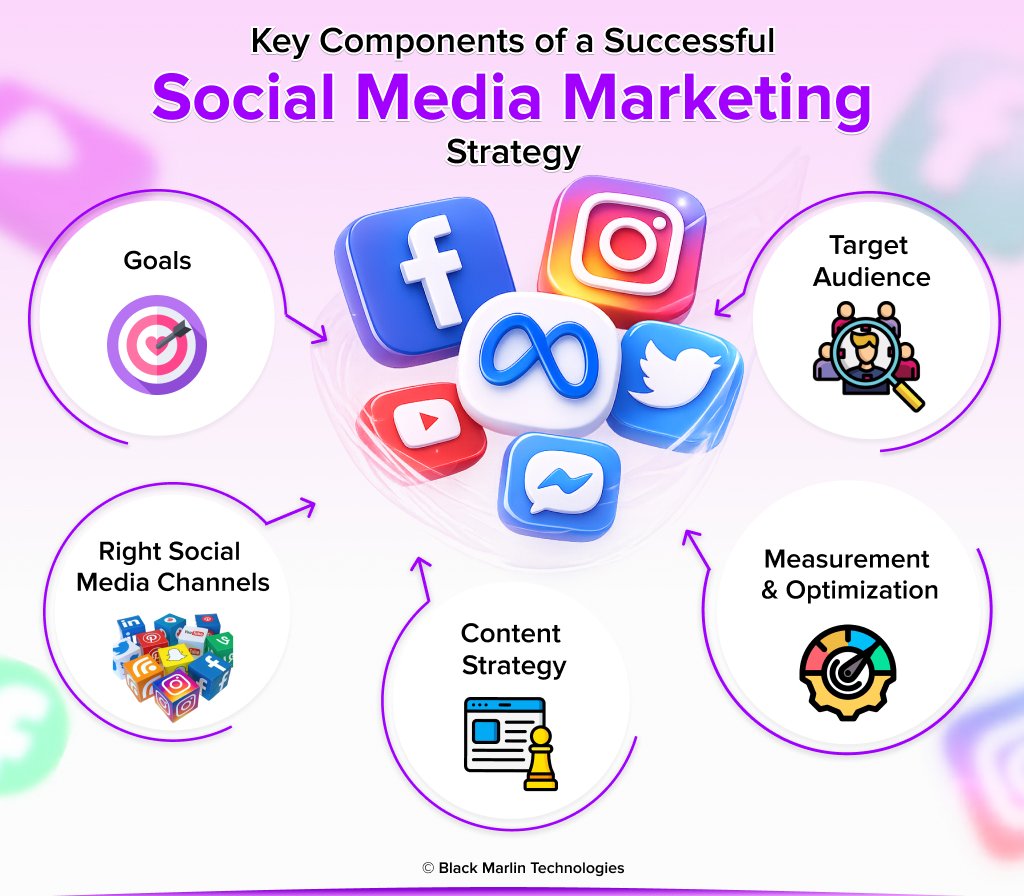
1. Goals
Start with clear goals.
Ask: What do I want from social media?
Examples:
- Increase brand awareness
- Drive website traffic
- Generate leads or sales
- Build a loyal community
Without goals, it’s impossible to measure success.
2. Target Audience
Next, understand who you’re talking to.
This includes:
- Age, location, and interests
- Online behavior and content preferences
- Problems they want solved
The better you know your audience, the more effective your social media content strategy becomes.
3. Right Social Media Channels
You don’t need to be everywhere.
Choose platforms based on:
- Where your audience spends time
- What type of content works best
- Your business objectives
As an example, Instagram and Facebook are best suited for short-form videos, while LinkedIn can be leveraged more for B2B marketing.
4. Content Strategy
This defines what you post and how often.
It includes:
- Content formats (videos, posts, stories, carousels)
- Posting frequency and timing
- Content themes and messaging
In 2026, content must be valuable, searchable, and engaging, not just promotional.
5. Measurement & Optimization
Finally, track what works and improve it.
Key metrics include:
- Reach and engagement
- Click-through rate
- Leads and conversions
Regular analysis is known to refine social media strategy so as to produce improved results over time.
Social Media Landscape in 2026
The social media world in 2026, as it has evolved over the past few years, is very different from that some time ago. Platforms have changed, user behavior has changed, and businesses are now using different networks for different needs. An understanding of this landscape could hold the key to building an effective social media marketing strategy for 2026.
Top Social Media Platforms in 2026 (and Who Uses Them)
Not all social media platforms work alike and thus, not all are best-suited for each type of business. This is a macro-summary of today’s top platforms:
1. Facebook
- Popular with Gen Z and young millennials
- Best for short-form videos, trends, and brand discovery
- Great for brand awareness, viral reach, and influencer marketing
2. Instagram
- Strong mix of Gen Z, millennials, and creators
- Reels, Stories, and carousels drive engagement
- Ideal for visual branding, product promotion, and social commerce
3. YouTube
- Used by all age groups
- Short-form (Shorts) + long-form educational content
- Best for education, trust-building, and long-term content value
4. LinkedIn
- Professionals, decision-makers, and B2B audiences
- Thought leadership and lead generation focus
- Perfect for B2B marketing, employer branding, and high-quality leads
5. X
- News-focused, real-time conversations
- Used by creators, brands, and communities
- Useful for brand voice, updates, and customer interaction
From Traditional Discovery to Social Search
One of the biggest changes in social media marketing in 2026 is how people discover content.
Earlier:
- User searched on Google
- Clicked websites or blogs
- Then explored brands
Now:
- User search directly inside social apps
- They look for products, reviews, tutorials, and services on platforms like Instagram, Facebook, and YouTube
This shift is called social search or in-platform discovery.
Why Social Search Is So Important in 2026
Today’s users:
- Search using keywords inside apps
- Read captions like mini blog posts
- Watch short videos instead of reading long articles
For example:
- “Best digital marketing agency” on Instagram
- “How to grow on YouTube” on Facebook
- “B2B marketing tips” on LinkedIn
That’s why social media SEO is now a core part of any modern social media marketing strategy.
Trends Shaping Social Media in 2026
Social media services in 2026 is being molded by technology, user behavior, and platform algorithms-what worked just last year may be obsolete already. Below will review the critical social media marketing trends for 2026 that every brand and marketer should understand-and then adjust themselves.
1. AI in Social Media Marketing
AI is no longer optional—it’s built into how social media works in 2026.
AI helps brands:
- Generate post ideas, captions, and video scripts faster
- Analyze audience behavior and predict what content will perform
- Personalize content based on user interests and activity
AI-powered chatbots and auto-responses now handle:
- Instant replies to DMs and comments
- Customer support queries
- Lead qualification
Sure, we could take user experience, engagement, and response time to the next level and save our brands hours of manual work. In perspective, AI-powered tactics can make social media marketing more productive and effectively scalable.
2. Short-Form & Video Content
Short-form video continues to dominate social platforms in 2026.
Why it works:
- It matches shorter attention spans
- It fits naturally into platform algorithms
- It’s easier to consume and share
Content platforms prioritize trending-native content-videos that feel more natural on the platform than polished ads. Hence, shorter, authentic and platform-specific videos create more hype and better reach for user engagement.
For brands, this means:
- Focus on Reels, Shorts, and vertical videos
- Adapt trends quickly
- Keep content informative, entertaining, or relatable
Short-form video is now a core pillar of any successful social media marketing strategy for 2026.
3. Social SEO (Discovery Signals)
One of the biggest shifts in social media marketing is social SEO.
In 2026, people:
- Search keywords inside social platforms
- Read captions like search results
- Discover brands without visiting Google
To boost discoverability, brands must optimize:
- Profile names and bios with keywords
- Captions using natural search phrases
- Hashtags that match search intent
The practice of search engine optimization increases the chances that the right users find your content when they are looking for solutions, products, or services. Posting content isn’t just enough; it must be made searchable.
4. Community & Authentic Engagement
Followers alone don’t guarantee success anymore.
In 2026, platforms reward:
- Meaningful conversations
- Comments, saves, and shares
- Long-term engagement
Brands are shifting from broadcasting messages to building communities. This includes:
- Replying to comments and DMs
- Encouraging discussions
- Sharing behind-the-scenes content
User-generated content (UGC) is very important here. Real customers sharing real experiences give trustworthiness, authenticity, and social proof that are valued by both the algorithms and users.
5. Social Commerce & Live Selling
Social media is no longer just influencing purchases—it’s where purchases happen.
Key changes in 2026:
- Users buy directly inside social apps
- Shoppable posts reduce friction
- Live selling builds urgency and trust
Brands now use:
- Product tags in posts and videos
- Influencer-led live sessions
- In-app checkout experiences
This makes social media a direct revenue channel rather than a mere branding tool and is particularly strong for product-based businesses and D2C brands.
Setting Clear Goals & KPIs for Social Media Marketing
A great social media marketing strategy for 2026 comes down to this simple query:
What do you want out of social media for your business?
Without clear targets, social media is quite the haphazard exercise—likes may increase but not the others, and certainly not business results. This is why relevant targets and KPIs (Key Performance Indicators) are essential to be determined in advanced.
Aligning Social Media with Business Outcomes
Social media should support real business objectives, not just online visibility.
Instead of setting simply a regimental schedule of post, in the year 2026, brands could anchor social media with mapping to outcomes such as:
- Growing brand recognition
- Generating qualified leads
- Driving sales and conversions
- Improving customer experience
When your goals are clear, every post, video, and campaign has a defined purpose.
Common Social Media Goals
Here are the most common social media marketing goals and how they connect to business growth:
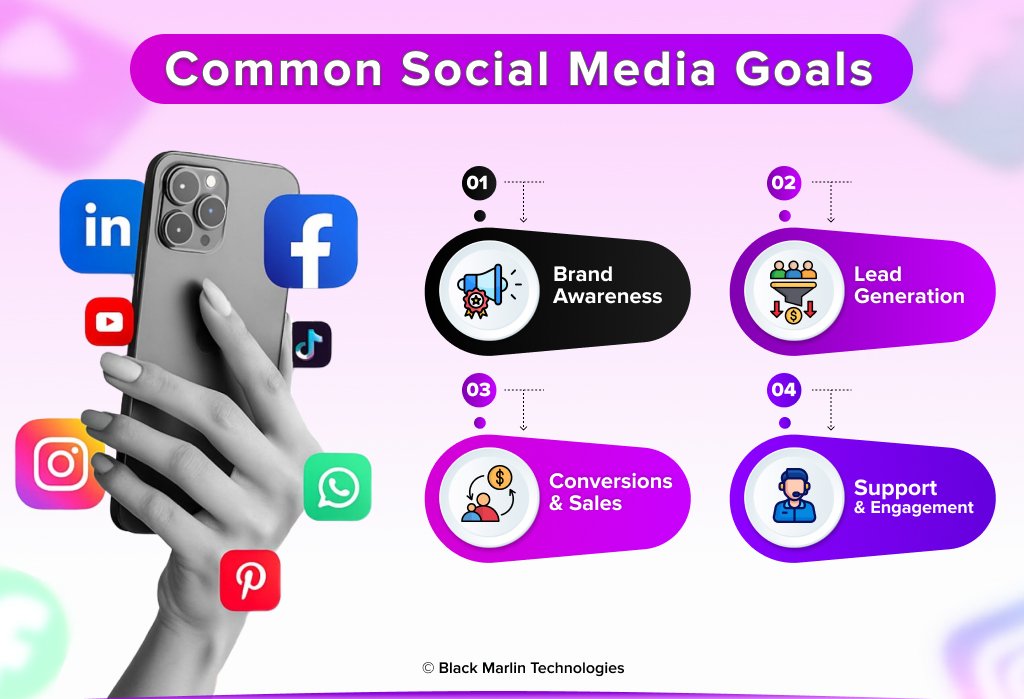
1. Brand Awareness
Best for new or growing brands.
Goal:
- Reach more people
- Increase brand visibility
Focus on:
- Reach
- Impressions
- Follower growth
2. Lead Generation
Ideal for service-based and B2B businesses.
Goal:
- Collect leads
- Drive inquiries or sign-ups
Focus on:
- Link clicks
- Form submissions
- Cost per lead (for ads)
3. Conversions & Sales
Perfect for eCommerce and product brands.
Goal:
- Drive purchases
- Increase revenue
Focus on:
- Website conversions
- Sales from social media
- Return on investment (ROI)
4. Customer Support & Engagement
Important for long-term trust and loyalty.
Goal:
- Improve response time
- Increase customer satisfaction
Focus on:
- Comments and DMs
- Response time
- Engagement rate
Audience Research: Know Who You’re Really Talking
A successful social media marketing strategy will not be built around platforms in 2026. Instead, it will be built around people.
A post of quality content is into no use if it is not presented to the right audience. Thus, audience research is one of the key stages in social media marketing today.
Segmenting Audiences by Behavior & Intent
Traditional audience targeting focused on age, gender, and location. In 2026, that’s not enough.
Modern audience segmentation is based on behavior and intent, such as:
- What content people engage with
- What they search for inside social platforms
- How often they interact with brands
- Whether they are browsing, comparing, or ready to buy
For example:
- Someone watching product reviews has buying intent
- Someone saving educational posts is in research mode
Understanding intent enables brands to serve just the right message at just the right time, thereby enhancing their engagement and conversion rates.
Using Platform Insights & Analytics
Every major social platform provides built-in tools to understand your audience better.
You can use platform insights to learn:
- When your audience is most active
- Which content formats perform best
- What topics drive engagement
- Audience interests and behaviors
These insights serve to refurbish your social media content strategy by doing away with the guesswork. Decisions are no longer based on perceptions; they are based on given data.
In 2026, data-backed strategies always outperform intuition-based posting.
Psychographics Matter More Than Demographics
Demographics tell you who your audience is. Psychographics tell you why they act the way they do.
Psychographics include:
- Interests and values
- Pain points and motivations
- Lifestyle choices
- Buying behavior
Two people of the same age and location might behave differently online. Hence more precise results can be achieved by psychographic targeting rather than plain demographics.
When your content speaks directly to:
- Problems
- Desires
- Emotions
It feels personal, relevant, and engaging.
Content Strategy Roadmap for Social Media in 2026
A well-defined social media strategy roadmap can keep your social media efforts consistent, focused, goal-oriented, and success-driven. Successful brands in 2026 don’t post haphazardly but rather follow a structured content plan that aligns itself with the needs of the intended audience and platform algorithms.
Use the checklist below to build a future-ready social media content strategy.
1. Define Clear Content Pillars
Content pillars are the main themes your brand talks about regularly.
They help you:
- Stay consistent
- Avoid running out of ideas
- Build authority in your niche
Examples of content pillars:
- Educational (tips, how-tos, explainers)
- Promotional (products, services, offers)
- Social proof (testimonials, case studies, UGC)
- Brand stories (behind-the-scenes, values, culture)
Strong content pillars ensure your messaging stays focused while still offering variety.
2. Choose the Right Post Formats
Different formats serve different goals.
In 2026, high-performing formats include:
- Short-form videos (Reels, Shorts, TikToks)
- Stories for daily engagement and updates
- Carousels for educational and step-by-step content
- Infographics for quick, visual learning
A balanced mix keeps your feed engaging and improves overall reach and interaction.
3. Plan Posting Cadence & Best Times
Posting more doesn’t always mean better results.
Focus on:
- Consistent posting schedule
- Quality over quantity
- Platform-specific timing
Analytics help identify:
- Best days to post
- Time slots when your audience is most active
A steady posting cadence builds trust with both algorithms and users.
4. Balance Trends & Evergreen Content
Trends bring visibility. Evergreen content builds long-term value.
A smart social media marketing strategy for 2026 balances both:
- Trend-based content boosts short-term reach
- Evergreen content drives consistent engagement over time
Jump on trends selectively—only when they align with your brand voice and audience interest.
5. Repurpose Content Across Platforms
Repurposing helps you do more with less.
One idea can become:
- A video clip
- A carousel post
- A story highlight
- A short caption post
This saves time, maintains consistency, and increases content reach without starting from scratch.
Platform-Specific Playbooks for 2026
In 2026, social media platforms would merge away from their conventional operators. The audience on each platform might now act differently; therefore, the best course of operation to optimize your campaign is to provide strong different forms of creative and content mixing. This means adapting one’s content to the specific social media platform rather than posting the same thing everywhere.
Below are platform-specific playbooks to help you get better results.
1. Instagram
Audience Behavior
- Users scroll for inspiration, products, and quick tips
- High interest in visual storytelling and short videos
- Strong engagement with brands and creators
Best Content Formats
- Reels (short-form video)
- Carousels (educational, step-by-step content)
- Stories (polls, Q&A, behind-the-scenes)
Algorithm Tips (2026)
- Prioritizes saves, shares, and watch time
- SEO-friendly captions improve discoverability
- Consistency + engagement in the first hour boosts reach
2. Facebook
Audience Behavior
- Discovery-first mindset
- Users consume fast, trend-driven content
- Less polished, more authentic content wins
Best Content Formats
- Short-form vertical videos
- Trend-based content
- Educational “quick tips” videos
Algorithm Tips (2026)
- Watch time matters more than followers
- Trend-native content performs best
- Clear hooks in the first 2–3 seconds are critical
Facebook is ideal for brand discovery and viral reach.
3. YouTube
Audience Behavior
- Users search for answers, tutorials, and reviews
- Long attention span compared to other platforms
- Trust-driven platform
Best Content Formats
- Long-form educational videos
- YouTube Shorts for quick discovery
- Tutorials, explainers, and how-to content
Algorithm Tips (2026)
- SEO-optimized titles and descriptions matter
- Watch time and session duration drive visibility
- Consistent posting builds long-term growth
YouTube supports both short-term reach and long-term authority.
4. LinkedIn and X
Audience Behavior
- LinkedIn: Professionals, decision-makers, B2B audiences
- X: Real-time conversations, news, opinions
Best Content Formats
- LinkedIn: Text posts, carousels, thought leadership content
- X: Short text updates, threads, brand opinions
Algorithm Tips (2026)
- LinkedIn favors comments and meaningful conversations
- X rewards consistency and engagement velocity
- Authentic voice performs better than promotional content
These platforms are powerful for B2B marketing, personal branding, and industry authority.
Paid Media Strategy (Social Media Ads) for 2026
Organic reach alone isn’t enough in 2026. Algorithms are competitive to beat, feeds are cluttered, and attention spans are limited. Smart invested budgets are vital to keeping and scaling your social media marketing strategy.
Paid social doesn’t replace organic content—it amplifies what already works.
Paid Social Complements Organic Strategy
Think of organic content as testing, and paid ads as scaling.
Here’s how paid media supports organic efforts:
- Boosts high-performing organic posts
- Reaches new audiences beyond followers
- Speeds up visibility and lead generation
- Supports launches, offers, and promotions
The best brands of 2026 will be utilizing organic content to build brand trust and use paid advertisements to help speed up the process of results.
Smarter Targeting in 2026: CBO & Audience Segments
Targeting has become more automated and data-driven.
Campaign Budget Optimization (CBO) allows platforms to:
- Automatically allocate budget to best-performing ad sets
- Reduce manual guesswork
- Improve cost efficiency
Audience targeting now focuses on:
- Interest-based audiences
- Lookalike audiences
- Retargeting warm users (video viewers, website visitors)
Instead of smaller targeting, the sites apparently concern themselves with larger target audiences coupled with strong creative content and messaging.
Creative Best Practices for Paid Ads in 2026
In 2026, creative matters more than targeting.
High-performing ad creatives:
- Feel native to the platform
- Look like organic content, not ads
- Deliver value in the first few seconds
Best practices include:
- Strong hooks in the first 2–3 seconds
- Short-form video over static images
- Clear messaging and call-to-action
- Authentic visuals and human faces
Ads that educate, entertain, or solve a problem outperform purely promotional ads.
Key Metrics to Track for Paid Social
To measure success, track:
- Click-through rate (CTR)
- Cost per lead or conversion
- Engagement rate
- Return on ad spend (ROAS)
These metrics help to optimize campaigns and ensure the paid social ads rates add real values for business operations.
Tools & Tech Stack for Social Media Marketing in 2026
In 2026, managing social media without the right tools up seems virtually impossible. With a Tools, Brands save time, stay consistent, analyze performance, scale faster.
Scheduling & Analytics Tools
Contents include scheduling tools to plan and maintain consistency in activity alongside platforms coupled with analytic tools to show what is working and what is not.
These tools help with:
- Scheduling posts across multiple platforms
- Tracking engagement, reach, and clicks
- Finding best posting times
- Monitoring audience growth
Popular examples include tools like Hoot suite, Buffer, and Sprout Social.
In 2026, data-driven decisions always outperform guesswork.
AI Assistants for Social Media
AI has become a powerful support system for marketers.
AI tools help with:
- Caption and content idea generation
- Video scripts and hooks
- Auto-replies for comments and DMs
- Content optimization based on performance
AI assistants decrease manual intervention while concurrently providing the given content with accuracy and consistency. In simpler terms, AI increases pace—not authenticity.
The key is to use AI as a helper, not a replacement for human creativity.
Keyword & Hashtag Research Tools
With the rise of social SEO, keyword and hashtag research tools are more important than ever.
These tools help you:
- Find searchable keywords inside social platforms
- Choose hashtags based on intent, not popularity
- Optimize captions and profiles for discovery
They bring more visibility on the platform in-percentage, assisting the content to show up for data searchers who require some topics, services, or solutions.
In 2026, content discoverability will rely heavily on optimizing your content rather than frequency of posts.
Tracking & Optimization: Turning Data Into Better Results
In 2026, post contenting will only be half of the show. The real growth comes from tracking performances and keeping consistent optimizations. To get up headways in social media marketing, one requires data, not guesses.
Tracking helps you understand what works, what doesn’t, and why.
How to Read Social Media Analytics Dashboards
Analytics dashboards can look overwhelming, but you don’t need to track everything.
Focus on understanding:
- Which posts get the most engagement
- What content drives clicks or leads
- When your audience is most active
- Which platforms perform best for your goals
Instead of looking at numbers erectly, compare performance over time. Patterns matter more than single posts.
Setting Weekly & Monthly Optimization Workflows
Consistency in optimization is what separates average results from great ones.
Weekly Optimization Tasks
- Review top-performing posts
- Identify low-performing content
- Respond to comments and messages
- Adjust posting times if needed
Monthly Optimization Tasks
- Analyze overall platform performance
- Review content pillars and formats
- Update goals and KPIs if required
- Test new ideas, trends, or ad creatives
This routine keeps your social media marketing strategy for 2026 flexible and up to date.
Metrics That Matter Most in 2026
Not all metrics are equal. Focus on metrics that connect to business impact.
Key metrics to track:
- Engagement Rate – Shows content relevance
- Reach & Impressions – Measures visibility
- Click-Through Rate (CTR) – Indicates interest
- Conversions & Leads – Reflects business value
- ROI / ROAS – Measures profitability
Likes alone will not convey the full story, other than what matters is so relevant in 2026, that is to say outcomes rather than activity.
Conclusion:
The social media marketing in 2026 is no longer confined to posting content consistently and looking for results. Rather, it must be a well-thought-out strategy, involving audience study, content suited to the platform, smart use of AI, social SEO, paid media input, and continuous optimization.
We discussed how social media platforms work in today’s scenario, a few trends that are shaping social media, setting goals rightly, concocting a strong content strategy, and also understanding how to decipher that which should make a real difference. When all is in perfect harmony, social media is that scalable and consistent growth channel for your business.
Now would be the best time to get your social media marketing plans for yourself ready for 2026. For sure platforms will evolve, but brands that get prepared will be light years ahead.