+1-(646) 362-1414
 +91 8826683820
 info@blackmarlintechnologies.com

The real estate world in 2026 is barely recognizable from just a few years ago. Today’s buyers will be more likely to come in contact with digital marketing in real estate rather than the sales office. They scan Google, social media, virtual tours, online reviews before even picking up their phones to call a real estate agent.
The paradox is that individuals want to get information quickly and to trust heavy enough, and if as your brand doesn’t pop up online or impress within the first few seconds, they’ll just have a look elsewhere for some other builder or agent giving away a smoother digital experience.
Therefore, in 2026, digital marketing strategies in real estate have become the crux of lead generation. Everything, from SEO, videos, virtual tours, WhatsApp marketing, to geo-targeted ads…all come into play to help get you into the right buyers’ arms at the right time.
- Understand What Today’s Property Buyers Want
- Build a Strong Real Estate Website Your Lead Hub
- Real Estate SEO to Rank for Local Buyers
- Geo-Targeted Ads for Faster Lead Generation
- CRM & Automation to Track and Convert Leads
- Influencer Marketing for Real Estate in 2026
- What These Influencers Can Help in Promoting
- AI Tools for Real Estate Marketing in 2026
- Lead Magnets That Work
- Build a Strong Online Reputation (ORM for Real Estate)
- Track Your Real Estate Marketing Results
- Final Action Plan
Understand What Today’s Property Buyers Want
Before you ever begin to plan out a digital marketing strategy for the real estate sector, you need to get a deep understanding of the way today’s property buyers are orienting themselves. The buyers in 2026 are smarter, faster, and more research-driven. They very quickly sift through sales pitches and compare everything online.
1. Fast Information
Modern buyers bring a mindset that demands immediate solutions. If your website loads quickly, tells buyers the prices, and answers basic project questions without hiding anything, they will stay. Getting relevant information fast is a confidence-driver and keeps the leads engaged.
2. Verified Property Images & Videos
People no longer trust random photos. People look for:
- Real site images
- Walk-through videos
- 360° virtual tours
- Drone shots showing project and neighborhood
Verified visuals make buyers feel secure and speed up decision-making.
3. Location-Based Results
Well begun is half done, most of the real estate searches begin with commonly occurring phrases like “Flats near me,” “Property in Gurugram in 2026,” or “Best areas to invest.” Therefore, maintaining hyper-local keywords and local SEO for the marketing of real estate. Buyers often look for some random properties in that particular area they like.
4. Easy Contact Options
If the client likes your property but has to search and they leave. Buyers want:
- one-click WhatsApp
- click-to-call buttons
- quick enquiry forms
- chat support
The more simply you allow them to contact you, the more leads you will convert.
5. Trust Signals Like Reviews
Reviews have heavily influenced real estate lead generation in 2026. Buyers are looking for evidence, not your promises. They trust,
- google reviews
- video testimonials
- ratings from past projects
- real buyer stories
Strong reviews set you apart when several developers seem the same on the surface on the internet.
Build a Strong Real Estate Website Your Lead Hub
To get more leads in real estate business in 2026, your website must work like the best salesperson in force – do its job 24/7, receive, and instantly respond to questions from buyers, and guide these buyers to take further action. Think of it as the hub of your real estate digital marketing agency.
Here’s what you need your real estate website to do in terms of conversion:
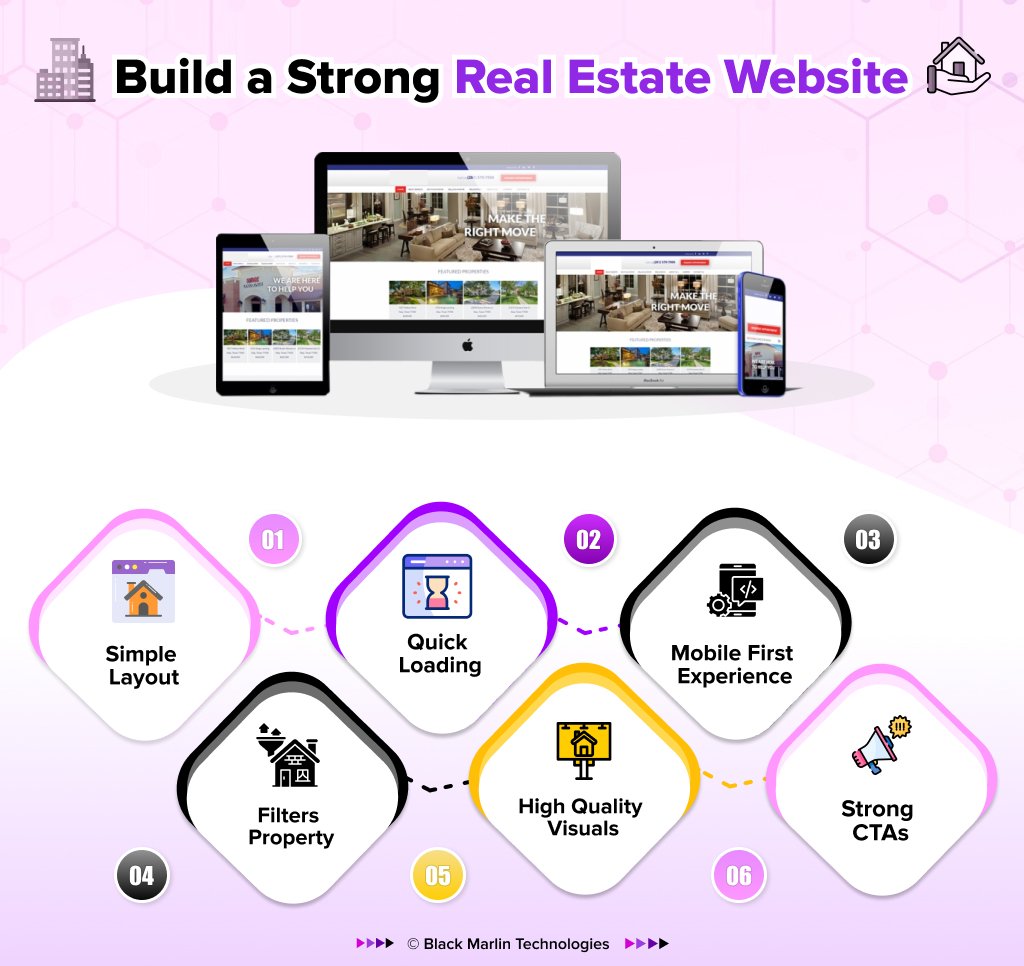
1. Simple Layout
Prospective buyers don’t want to “figure out” how to use a website. They want clarity.
A clean design, clear menus, and easy navigation enable visitors to find as quickly as possible what they are looking for—property details, pricing, location, and contact options.
2. Quick Loading
Online buyers have no patience. Slow speed will kill real estate leads.
Fast load times will help you with:
- Keeping users on your page
- Improving SEO ranking
- Boosting conversions
Speed = trust.
3. Mobile-First Experience
More than 70% of searches for real estate happen on phones now.
Your site needs to have:
- Legible text
- Clickable buttons
- Speedy navigation
- Optimized Images
If people have a frustrating time on your mobile website, leads are sure to be disbanded.
4. Filters Property
Buyers love customization.
By adding smart filters that enable the consumer to search based on budget, BHK apartment count, location, benefits, and possession dates, you are making their lives immeasurably easier in this regard, thereby enhancing the user experience and increasing the volume of enquiries.
5. High-Quality Visuals
Real estate happens to be a field where visuals speak volumes. Interest generated in buyers following high-resolution photographs, videos, drone shots, and virtual tours is instantaneous.
Visuals enable buyers to see how they would be utilizing this space, which somehow provokes a number of enquiries.
6. Strong CTAs
Your CTAs should tell the buyer the next course of action.
Like:
- Book a Visit
- Get Brochure
- Call Now
- Check Price Sheet
Strong CTAs can convert seemingly uninterested website viewers into solid leads.
Real Estate SEO to Rank for Local Buyers
Real Estate SEO is perhaps the best strategy you can take on in 2026 to secure top billing when buyers search for projects online. The point of origin for most property searches is usually Google, especially regarding location-specific phrases, therefore local ranking is the sole way by which real estate leads are to be consistently generated.
Here is a simple, easy method for beginners:
1. Optimize for Local Real Estate Keywords
Buyers seldom use any complicated language in their search, only simple and effective words like:
- “BHK flats near me”
- “properties in Delhi 2026”
- “affordable flats in Mumbai”
Add these types of keywords into the various project pages as well as its blogs and meta tags. These help Google to understand the project’s location and match it up with the right local buyer.
2. Adding Local Schema
This is a short piece of code that helps Google in understanding important details about your business — your location, opening hours, contact number, and services.
Understanding your business even better makes Google more likely to show your projects to local searches and listings on a map.
3. Inculcate Special Project Pages
Each property must have its own distinct project page. A nicely patterned project page entails:
- An overview
- Pricing
- Floor plan
- Amenities
- Location map
- Walkthrough videos
- And CTAs among “Book A Visit”
Search engines, by default, appreciate well-structured pages, and for buyers it is easier to have everything in one place.
4. Add Helpful Real Estate Blogs
There are always buyer-led queries for which blogs are thought to bring solutions:
- “Best places to buy property in 2026”
- “Top investment areas near Monroe”
- “Rent vs. Buy in 2026”
Valuable content can help you get more traffic, earn more trust, and furnish you with intent customers.
5. Create Local Citations
Citations are online mentions of your business name, address, and phone number.
For example:
- JustDial
- Google Business Profile
- Yelp
- Housing.com profiles
- Local directories
These citations make your business look more credible and help improve your local rankings.
Geo-Targeted Ads for Faster Lead Generation
One of the biggest benefits of digital marketing in 2026 for real estate could be the ability to target buyers concentrating on specific geographical locations. Instead of showing ads to everybody, geo-targeted ads enable you to focus only on neighborhoods, income levels, and audiences that are more likely to enter into your property. So, it implies that they bring in more quality leads at a lesser cost.
Below is how hyper-local ads can work:
1. Google Ads Focusing on Specific Neighborhoods
Google Ads facilitates campaigns for very specific areas-even down to ZIP codes, city blocks, or areas where everyone knows the name.
Examples of these include:
- “2 BH near Bandra East”
- “Flats for sale in Whitefield”
The adage here is that whenever anybody from that locality looks up anything property-related, your ad shows up on their webpage. It creates high-intent, location-based real estate leads for you.
2. Facebook Ads Making A Run at Job Titles + Income Level
Facebook as well as Instagram are able to become cryptic while targeting people according to lifestyles and monetary strength, so it means you may well then target:
- Job titles (IT professional, manager, executive)
- Income range
- Age group
- Interests like “Realty-investment land”
This will target such buyers that are most likely to be able to afford your project and engage in actively searching for a property.
3- Geo AI Tools for Buying Intent Forecast
Entering 2026, one of the most significant boons for digital marketing in the real estate sector is Geo AI tools.
These tools look at:
- Location patterns
- Prior search history
- Engagement behavior
- Buying signals
Tell you who is more inclined to buy and where they are located. This sends your ad to the appropriate market target as needed.
4. Retargeting Ads Used to Address Website Visitors
Most of the time, customers may not be inquiring for something on their first visit. It’s perfectly normal.
Retargeting loops them again, displaying ads like:
- Project walkthrough videos
- New price updates
- Super limited-time promotions
- Booking reminder ad
You keep them interested until their purchase decision is firmed up.
CRM & Automation to Track and Convert Leads
Speed and follow-up are crucial in real estate. Perfect CRM software accompanied with automation has become imperative in 2026. It helps you nurture leads better and react quickly and ensures that the buyer does not escape your pocket. This can be considered your personal assistant that operates 24/7 on your behalf.
Learn how CRM and automation advantage in yielding and conversion of the lead of the real estate:
1. Track Buyer Interest
What a CRM does is it gives an accurate idea of each buyer’s interest:
- The particular project they viewed
- Pages they went to most
- Number of visits
- Properties that caught their eyes
This improves the personal nature of your follow-up.
2. Send Out Reminders Automatically
Many times buyers do not recall to get back — but the CRM gets rid of that problem. This can:
- Ensure they get helpful reminders to schedule a time for
- Keep them informed about updates in the price sheet
- Inform of limited units left for sale
The slight nudges can keep the buyer along the frame of why they would want to proceed with the purchase.
3. Follow-Up Automation
Automated messages for anything from greetings to brochures can accompany dump emails to clients and even project videos — and that is just the tip of the iceberg for what marketing can do for the growth of a business. Therefore, the AI gives a chance to work and chat at times when there is no one physically there to do it, and this takes quite a stress off running businesses.”
4. Lead Scoring
The way in which one scores a lead is generally dependent upon one’s intentions.
The sales lead is scored for distinguishing the three main groups namely:
- Hot leads (are right at the point of buying)
- Warm leads (active, but not close to making any purchase)
- Cold leads (not really interested in the business)
For this reason, the sales force proceeds ahead with its entrepreneurial journey components under these three buyer journeys.
5. Faster Response Time
Quick responses are a thing of content law in real estate; the CRM responses allow the platform for automated immediate response:
- Email templates are activated
- Whatsapp opens within seconds
- Immediate notifications
Get some closure already.
Influencer Marketing for Real Estate in 2026
Influencer marketing has become a significant trend 2026-era real estate digital marketing. Prospective purchasers are more likely to trust real people over conventional advertising, and influencers can build the bridge of trust. A property becomes quite quickly more genuine and relatable whenever someone they follow on social talks about it.
Here are the influencer types that come in handy in real estate-specific promotions — and what they can speak for on your behalf:
1. Local City Creators
City influencers walk and chat with the city — alleys, neighborhoods, culture, traffic rules, the best spots to hang out, the best schools, and the lifestyle of the streets. They are good for:
- Showing nearby hotspots
- Talking about commute time
- Emphasizing neighborhood safety and convenience
Their audience, mostly, consists of city residents or potential movers to the city.
2. Finance Influencers
Finance influencers usually render easy-to-understand financial content for their followers. They would support or support their tribe in a number of annuity-related questions, for example, investment-real estate.
Here’s what they can advertise:
- Benefits of property investments
- Expected returns
Loan/EMI
This is the correct investment in 2026.
This is a great way to attract investment-savvy buyers.
3. Architecture & Design Influencers
Influencing credibility is brought in from a design and quality perspective.
Our Influencers can bring focus to:
- Floor plans
- Space planning
- Interior design suggestions
- Latest finishing and appointment techniques
They make potential buyers notice the finer things about your project.
What These Influencers Can Help in Promoting
- Property Reviews – Influencers can physically come and review the many aspects of your project and give an unbiased and pro-consumer understanding of it that is far better and more trustworthy than marketing campaigns.
- Area Lifestyle – This will involve a description of the actual living in terms of cafe areas, parks, schools, cinemas, and facets of life throughout the neighborhood. This helps buyers in creating an imagery for the life one day at their project.
- Live Site Visits – In live videos, reels or vlogs, influencers can walk their audience through the property in real time. This creates and strengthens excitement and authenticity.
AI Tools for Real Estate Marketing in 2026
By 2026, the AI-driven technology had transformed the real estate industry by upending the existing marketing strategies to bring levity to digital marketing. Instead of guessing what buyers want, AI proposes the solution by analyzing data, predicting behavior, and hence allows you to make smarter decisions. Essentially, an AI enhances your marketing strategy further when it works 24/7. It can get things done faster, more accurately, and more efficiently.
So how do AI tools empower real estate digital marketing?

1. Predict Buyer Intent
AI will track user behavior—what they search, the pages they view, dwell time, what properties they ogle, etc., to figure out their intent to buy. By so doing, a few major benefits will occur, including:
- Recognizing hot leads
- Sorting follow-ups
- Sending the right email at the right time
Intention-prediction smoothens your sales process.
2. Generate Real-Estate Ads Automatically
AI tools can generate the ads itself when virtually there are so many of them possible to create. The following can be quickly formed instead of creating them manually in the new era of marketing:
- Google Ads
- Facebook/Instagram ads
- Property headlines
- Creative captions
Past performance data is used by them to create advertisements that resonate better with leads and also generate them at lower costs.
3. Creating Personal Landing Pages
AI can design landing pages automatically, based on every buyer’s interest.
For instance:
In this regard, if someone came across 2 BHK project information, he/she, on landing, would view 2 BHK prices, floor plans, and visuals.
Personalizing drastically increases engagement and boosts conversion.
4. Analyzing Past Leads
AI helps you understand which leads converted and which didn’t and help in identifying why.
Therefore, you can determine:
- The channel brought the best ROI
- The kind of buyer essentially considered
- Properties that attracted all attention
This kind of insight helps one better real estate marketing plan month after month.
5. Create Automated Callbacks
AI will not let any lead go, miles away from your reaching back; it comforts you with automated:
- WhatsApp messages
- Email sequences
- Brochures
- Price updates
- Appointment reminders
This is the automatic Christmas shopping. Buyers remain contiguous in the pink without your team drudgingly following them up for each contact.
Lead Magnets That Work
When it comes to real estate digital marketing, buyers rarely dish out their contact information unless they get something in return. In this perspective, lead magnets come in handy, These are tools or resources that you freely offer, while in exchange, you are furnished with either the names, emails, or mobile numbers of the buyers. To put it simply, it is a win-win situation; prospects glean usable information from you, while you, in turn, gain high-quality leads.
Now, let us look at some top lead magnets of real estate for the year 2026:
1. EMI Calculator
Every person wants to know how much they will pay every month.
The EMI calculator performs an analysis and tells prospective buyers what they will stand to get in addition:
- The maximum they can afford
- Their monthly budgets
- In the long run, the impacts on their loans
- This simple tool lays down trust and keeps the interested prospect hooked.
2. Neighborhood Guide
People want to get a feel for an area before zeroing in on a property.
Included in this information guide are items relating to:
- Schools and colleges
- Hospitals
- Shopping places
- Public transport access
- Lifestyle highlights
Buyers love it since they can involve themselves in picturing what life in this location would feel like.
3. Investor Report
Nowadays, many home buyers consider themselves investors.
An investor report will disclose the following:
- Speculated ROI
- Futuristic development plans
- The potential on rental income
- Market trends likely to transpire in 2026
Now you are turning your property into an intelligent investment opportunity.
4. Price Comparison Sheet
Buyers are always making comparisons among different projects. In this regard, this simple price comparison sheet shall show them:
- How your project is set against competitors
- Comparison of the cost difference between your project and its counterparts
- What is special about your project
This kind of clarity gives you reputation and psyche value, eventually nurturing the buyer’s decision-making process.
Why These Lead Magnets Work
On the one hand, these tools provide the buyer with precious information, but on the other hand, they give you as the seller his contact details. This builds trust and then ushers them into the sales funnel through a natural course via conversations.
Build a Strong Online Reputation (ORM for Real Estate)
Trust in property is fundamental. Without trust, buyers will stop any negotiations as long as they deal with an agent or the developer. Consequently, in 2026, the medium of online publicity techniques of the real-estate market has become crucial to manage Online Reputation. A positive online reputation will not just increase the credibility but also increase the number of leads of high quality. Here’s how you can build trust the right way:
1. Get Google Reviews
Most buyers check Google reviews first before they talk to you.
Provide them with a simple link to leave positive reviews; it will help you to build reputation for your website.
- Payment date/possession date/trial
The important thing is to solicit more reviews.
2. Politely Answer Back
A formal tone must always be used, no matter if the review itself is positive or negative.
Turning towards negative comments:
- You must address their concern.
- You may ask them to describe the solution that would make them satisfied.
- You have to empathize with others.
Those responses show that you care about your customers and it will contribute positively to the image of your brand.
3. On Your Website, Add Testimonials.
Sharing the stories of your work in the form of work testimonials can create instant credibility.
To follow:
- Vid-Testimonials
- Written testimonials
- Photos of my clients (if allowed)
- Success stories
Buyers prefer actual experiences compared to the “also-rans” of sales presentations.
4. Write Case Studies
Here is the customer’s journey from query to purchase. Some things are worth including:
- The main challenges they faced
- Why they opted for your project
- What did you do that helped them?
- Their overall feedback-whole works
This helps the buyer visualize and relate with his/her journey throughout buying the property.
5. Proof of project completion
Noting actually builds loyalty to a brand as well as bring the literally expected trust with proof of completion.
Just show:
- Before-and-after pictures
- Construction updates
- RERA stats
- Hand-over shots
- Video walkthroughs of finished units
All of these pieces when put together can ransom epitome of faith in your company as it signifies that you are not deceptive.
An online reputation is critical when it comes to staying ahead of your competitors, developing long-term trust, and converting doubting prospects into confident buyers. ORM isn’t a choice but an indispensable part of generating leads for real estate in 2026.
Track Your Real Estate Marketing Results
Generating leads for real estate in 2026 is not just running a campaign but tracking what’s working and what’s not. An accurate understanding of your performance will allow you to spend smart, bring in better leads, and have improved refinery. And here is a happy thought for you! There are just a few simple pointers that must get covered here.
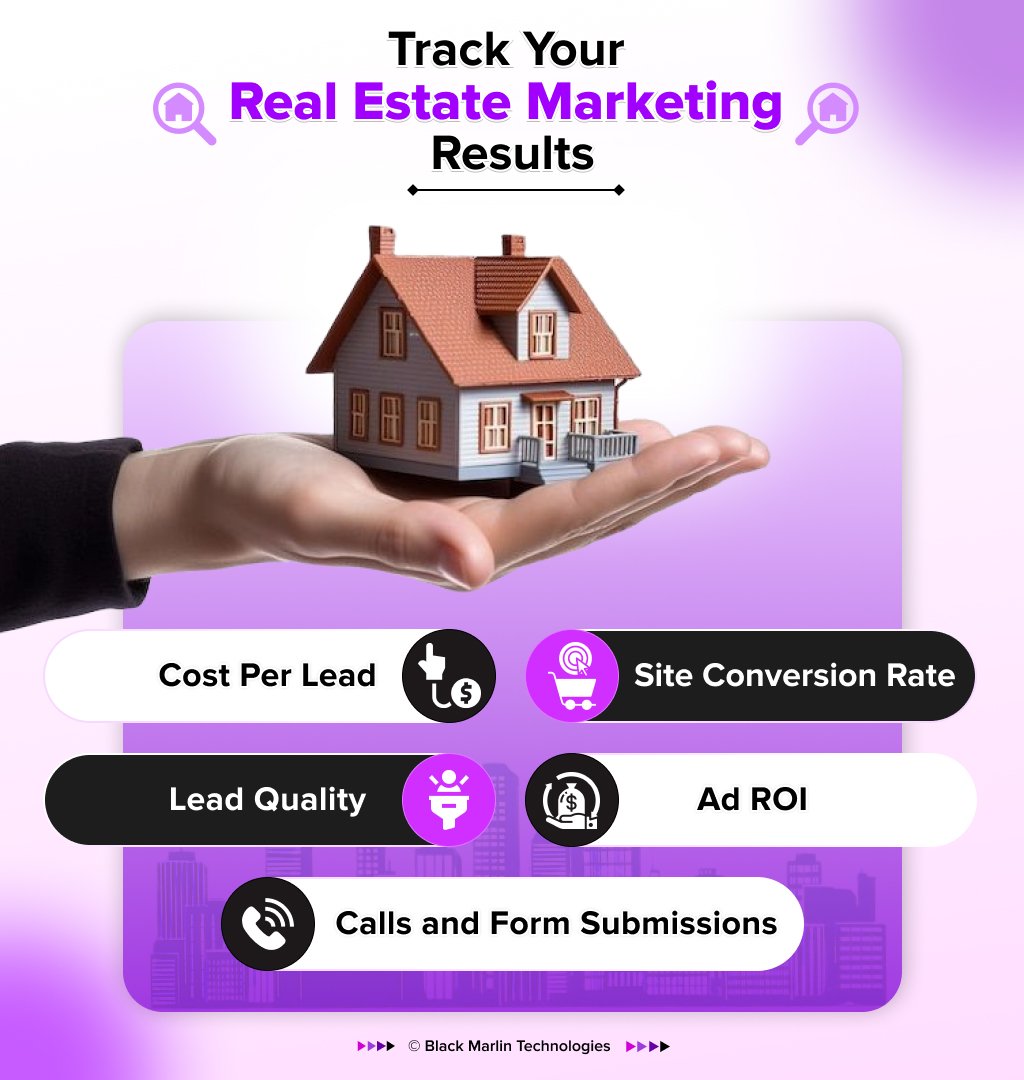
1. Cost per Lead (CPL)
The Cost per Lead metric shows what you have had to pay for an inquiry.
As your CPL is going up:
- Clearly, your ads are not working well and need greater-targeting refining.
- Your landing page is not convincing enough.
- Your message is not engaging enough.
With a lowering CPL, one enjoys more leads at the same budget level.
2. Lead Quality
The lead quality is the measurement to see what campaigns are actually converting high-quality data.
Lead quality can show which types of leads are:
- Serious buyers
- Fit for budget
- High-intent inquiries
High-quality leads can be transformed through sales pipelines faster, leading to less time wasted by your sales team.
3. Site Conversion Rate
The number of visitors who actually convert into an inquiry on your website.
Can’t settle for anything below 5 to 10 % of the lead conversion rate on a good real estate website. A slow rate might be due to:
- Low page speed
- No CTAs
- Property images are not detailed enough
- Lack of proper contact information
Simple innovations can lead to plenty of inquiry transactions.
4. Ad ROI
Ad ROI represents how much marketing money you are converting into resultant leads, and it lets you determine whether or not you are efficiently utilizing your advertising money.
You should track where the:
- Google Ads
- Facebook campaigns
- Instagram reels
- YouTube videos
stand in terms of lead generation.
Spend where response is good, and cut off what sounds like an unwise use of money.
5. Calls and Form Submissions
It is finally when calls are made together with form fills that a silver lining can be spotted for real digital marketing results.
You need to keep track of:
- How many people always filled a form
- How many clicked “Call now”
- How many booked a site visit
The move a prospect makes will position you to convert him within the shortest time ever.
Tracking these metrics helps you make better decisions and consistently generate real estate leads, while fine-tuning your strategy so that you reach a wider audience without increasing your marketing budget.
Final Action Plan
Lead generation in real estate in 2026 does not have to feel overwhelming; break it up, perform the basics very well, and remain consistent for success. Here is a simple course of action that you can begin today:
1. Create a Clean Website
Your website is your online store.
Have it fast, easy to navigate and mobile-friendly, and give it excellent visual representation. By presenting an unimposing façade, a clean website persuades a visitor to make an enquiry or take another action.
2. Use SEO and Local Marketing
Target local and buyer intent keywords like “2 BHK near me 2026” or “flats in Gurgaon 2026.”
Great keyword research fetches you local prospects scouting for properties across the area.
3. Place Geo-Targeted Ads
Only show your ads to people in specific neighborhoods or income groups.
Geo-targeted ads ensure that you reach a qualified audience and bring down the cost per lead.
4. Made Use of Video and Virtual Tours
Buyers demand better images of the property before they come to see it.
Demonstration videos, drone shots, and virtual tours pique instantaneous interest and upgrade the quality of a lead.
5. Follow Up with Automation
Do not allow leads to grow cold.
Use CRM tools to automate emails, provide reminders on upcoming tasks, and send follow-up inquiries anytime-even if your staff is preoccupied.
6. Request Reviews Regularly
Great reviews can work wonders for creating trust.
Ask your satisfied buyers to leave reviews for you on your website, social media, or both.
By employing these uncomplicated yet potent measures, one could initiate a system that pulls in more buyers, making a name by itself in the trust building process and delivering a regular stream of topographical leads all the way through 2026 without the large expenditures.